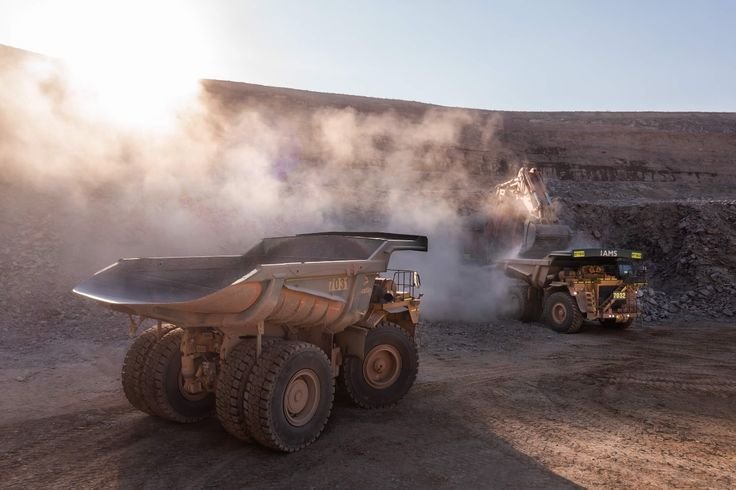

Is Kenya open to new mining investment by foreign investors?
Kenya’s mining sector has been open for new license issuance since October 2023, and capital from the United States and Europe is increasingly testing the market for lithium, rare earths, titanium, gold, and industrial minerals.
Before a foreign investor commits seven or eight figures to technical, legal, and environmental due diligence, there is a shorter verification exercise that should come first. This article sets out what that exercise looks like.
Is Kenya open to new mining investment by foreign investors?
Yes. Kenya reopened new mining licence issuance in October 2023 after a multi-year moratorium. However, investors should not assume that every mineral or project is treated the same way. Construction and industrial minerals have generally moved back into active licensing, while strategic minerals may still require case-by-case review. Before committing to a Kenyan mining opportunity, foreign investors should confirm the current licence position directly through the Online Mining Cadastre and relevant Ministry records.
Why this verification step exists
Most foreign investors entering a new African jurisdiction move straight from desktop research into full-scale due diligence: JORC or NI 43-101 resource reporting, ESIA scoping, tax structuring, project finance modelling. In Kenya, that sequence creates avoidable exposure.
The reason is practical. Kenya’s mining regulatory architecture was rebuilt by the Mining Act, 2016 and the regulations that followed it. Between December 2019 and October 2023, the State operated a moratorium on new prospecting and mining licences while it reviewed existing rights, conducted a national geological survey, and declared roughly 1,500 licences inactive. That clean-up was genuine, and it has produced a more structured market than the one that existed before 2019 but it has also created a specific set of verification questions that did not exist in the same form a decade ago.
A target company’s licence file, a seller’s title deed, or a local partner’s stated permissions may all look clean. What the investor actually needs to confirm is whether any of those documents still reflect current reality on the cadastre, in the Directorate of Mines records, and at the county level. The items below are the ones that repeatedly determine whether a Kenyan mining opportunity survives formal due diligence or dies during it.
1. Verify the licence on the Online Mining Cadastre
Kenya operates a public Online Transactional Mining Cadastre Portal that records the status of prospecting licences, mining licences, retention licences, permits, and applications. Certificates on paper are not sufficient evidence. Any investor or counsel acting for an investor should pull the current cadastre record directly.
What to confirm
- The licence number, holder name, and registered address match the documents the target or seller has provided.
- The licence type is the one the target is actually operating under (reconnaissance, prospecting, retention, or mining) and the stage matches the commercial narrative.
- The spatial coordinates on the cadastre match the area the target claims to hold. Overlaps with adjacent applications, active licences, or excluded areas are visible on the portal and are one of the most common sources of later dispute.
- The licence is live, not lapsed, surrendered, suspended, or marked for revocation.
- Annual rent, mineral royalties, and other scheduled payments are current. A licence that looks active but carries unpaid obligations is effectively a liability masquerading as an asset.
If any of these items cannot be confirmed within roughly one working week of instructing Kenyan counsel, the investor should treat that delay as a finding, not as a procedural inconvenience.
2. Check which mineral is involved, and whether it is classified as strategic
Under the Mining Act, 2016, the Cabinet Secretary for Mining may classify minerals as strategic. The practical consequences are specific. Where a mineral is strategic, the State has a right of pre-emption over sale, and the State is entitled to a ten per cent free-carried interest in the share capital of the company holding the mining licence, without financial contribution.
In October 2023, when the moratorium was partially lifted, the Government reopened licensing for construction and industrial minerals but kept strategic minerals under a case-by-case regime. For an investor targeting lithium, rare earth elements, cobalt, or tsavorite, this is not a drafting detail, it materially changes the economics of the deal, the corporate structure, and the exit profile.
What to confirm
- Whether the specific mineral at the project site is currently classified as strategic under the most recent Ministry of Mining communication.
- Whether the State’s ten per cent free-carried interest has been recorded at the licence level, and if so, how it is reflected in any existing shareholders’ agreement.
- How the right of pre-emption would interact with the planned offtake arrangement. For many investors, this single point determines whether a planned offtake to a parent company, a US processor, or an EU battery supplier is commercially viable at all.
3. Verify land access, separately from the licence
A mineral right in Kenya does not, by itself, give the holder the right to enter the land. That is a separate legal question, and it is where a surprisingly large share of Kenyan mining projects stall.
Kenya recognises three principal land tenure categories: private land, public land, and community land. The Mining Act requires express consent from the registered owner of private land before prospecting or mining may proceed, and consent may not be unreasonably withheld. For community land, consent must come either from the authority responsible for administering that community land or, where the community land is unregistered, from the National Land Commission. The Community Development Agreement Regulations additionally require structured consultation with the affected community, and the supporting regulations are explicit that the support of community leaders alone is not a substitute for community consent.
What to confirm
- The tenure category of every parcel inside the licence area. A single project often sits across two or three categories.
- Whether signed consents exist, and whether the consents were given by the parties the law actually requires, not just the parties most accessible to the original applicant.
- Whether a Community Development Agreement is in place where one is required. Large-scale mining right holders are required to enter into such agreements, and their absence is a regulatory defect, not a negotiating opportunity.
- Whether there are active disputes, court filings, or gazette notices affecting the parcel. Historical disputes that were never formally closed have a habit of reappearing at project financing.
An investor should not assume that a seller’s assurance on land access is worth anything until the paper trail has been independently retraced. Kenyan courts have consistently treated deficient public participation and community consent as grounds to set aside permits, and lenders and DFIs will apply the same standard during environmental and social review.
4. Confirm the environmental licence chain is complete
The Mining Act requires an environmental impact assessment licence from the National Environment Management Authority (NEMA) before substantive operations begin. For a genuine mining licence, as opposed to early-stage reconnaissance, the EIA licence should already be in hand, and it should cover the activity actually being performed.
What to confirm
- The EIA licence exists, is current, and names the correct licence holder and site.
- The scope of the EIA matches the planned operation. An EIA issued for exploration does not cover production; an EIA issued for one commodity may not cover a change of mineral.
- Conditions attached to the EIA (monitoring, reporting, rehabilitation bonds, community obligations) are being met in practice, not only on paper. Non-compliance gives NEMA a basis to suspend operations and gives lenders a basis to decline to close.
- Where the project will require water abstraction, forest area use, or operation near a gazetted conservation area, the consents from the Water Resources Authority, Kenya Forest Service, and Kenya Wildlife Service as applicable are in place.
5. Check the corporate and investor-permit position of the holding entity
A mineral right in Kenya may be held by a company that is established in Kenya. A foreign investor entering the sector will typically use either a Kenyan subsidiary of a foreign parent, a Kenyan company in joint venture with a local partner, or, in larger cases, a purpose-built project company held through a jurisdiction selected for treaty protection and tax efficiency.
What to confirm
- The target or project company is properly incorporated and active at the Business Registration Service, with current filings.
- The directors and ultimate beneficial owners are correctly registered. Beneficial ownership disclosure has tightened in Kenya and will be retested at project financing.
- Any expatriate personnel who will be on site have the correct work permit class. For investors and senior technical staff, this is typically Class A or Class D; errors here trigger both immigration and labour-law exposure.
- Any local partner’s shareholding, control rights, and consent thresholds have been stress-tested against the scenarios that actually matter (deadlock, change of control, exit), and not only the scenarios the partner is comfortable discussing.
6. Test whether the project is being sized for a mineral agreement
The Mining Act permits the Cabinet Secretary, in consultation with the National Treasury, to enter into a mineral agreement with the holder of a mining licence where the proposed investment exceeds USD 500 million. These agreements are the principal mechanism for fiscal and regulatory stability in Kenyan mining. Mineral agreements must be published and accessible to the public.
For investors above that threshold, the mineral agreement is not a nice-to-have. It is how the project protects itself against future tax, royalty, and regulatory changes over the life of the mine. The verification question is not whether the target has such an agreement today (very few projects do) but whether the project has been structured so that one can be negotiated when the capital scale justifies it.
7. Read the local content and local equity obligations carefully
The Mining Act imposes specific obligations on licence holders: preference in employment for Kenyan citizens, a programme for recruitment and training of Kenyans as a condition of the mineral right, preference for local products and services, and, in defined circumstances, local equity participation. These are not soft commitments. They are enforceable conditions of the right.
What to confirm
- The training and recruitment programme required as a condition of the right has been submitted, approved, and is being executed.
- Local equity participation requirements, where applicable to the licence type and scale, have been reflected in the cap table and in any shareholders’ agreement.
- Procurement arrangements are consistent with the preference obligations. Where a foreign investor plans to import equipment under the large-scale-operator exemption, the corresponding paperwork is lined up.
8. Run a royalty and payment-history check
Mineral royalties in Kenya are shared between the national government, the relevant county government, and the local community on a 70 / 20 / 10 basis under the Mining Act framework. The detailed arrangements for the county and community shares have been the subject of continuing regulatory work.
What to confirm
- The target’s royalty payment history is consistent with declared production and export volumes.
- There are no outstanding demands from the Kenya Revenue Authority in respect of mineral royalties, VAT on services, or corporate tax.
- County government levies have been paid where applicable, particularly for projects whose footprint sits inside a single county that has been active on resource-sector revenue.
- Export permits issued by the Director of Mines for prior shipments are on file and correspond to the declared royalty base.
9. Map the political and regulatory calendar
Kenya’s mining sector has been subject to structured, publicly stated regulatory reform since 2016, and the pace of that reform has increased since 2023. That is, on balance, good news for investors who want a predictable framework. It also means that anyone entering the sector today needs to understand which items are settled and which are in motion.
At the time of writing, continuing work includes detailed rules on royalty collection and sharing, further regulations under the 2016 Act, the Gold Processing framework, and the ongoing classification of minerals as strategic or non-strategic. An investor’s position on any of these issues should be explicit in the investment thesis and reflected in the structure, not left to be discovered later.
Kenya is not a risk-free mining jurisdiction. It is an increasingly structured one. Those are not the same thing, and the difference matters to how a deal is built.
10. Decide the order of operations before spending
For an investor comparing Kenyan opportunities to targets in Tanzania, Mozambique, Ghana, or the Democratic Republic of the Congo, the cost of due diligence is rarely the binding constraint. The binding constraint is the opportunity cost of spending six months and a seven-figure budget on a target that was never actually going to close.
The ten items above are designed to be completed in weeks, not months, by Kenyan counsel with direct access to the cadastre, the Ministry of Mining records, NEMA, the Business Registration Service, and county-level authorities. Completing them first changes the character of the downstream work. Due diligence then becomes an exercise in pricing and structuring a project that has already been confirmed to exist on solid regulatory foundations, rather than an exercise in discovering, halfway through, that it does not.
How WAREN Law Advocates supports this stage
We sit on the Nairobi end of this verification work. We do not replace an investor’s technical consultants, in-country auditors, or international project-finance counsel. We give foreign investors, their boards, and their international advisors a clear written position on whether a Kenyan mining target is actually what it is being presented to be before the investor commits substantive budget to the next stage.
If you are evaluating a mining opportunity in Kenya, the most useful first step is usually a short, scoped instruction to run the verification exercise above. Investors, fund principals, and project sponsors who would like to discuss a specific target are welcome to contact the firm.
Book a Call
FAQs
Is Kenya currently issuing new mining licences to foreign investors?
Yes. The Government lifted the moratorium on new prospecting and mining licence issuance in October 2023 for construction and industrial minerals. Strategic minerals continue to be processed on a case-by-case basis. New applications are filed through the Online Transactional Mining Cadastre Portal and are processed by the Directorate of Mines and the Mineral Rights Board under the Mining Act, 2016.
What is the difference between a prospecting licence and a mining licence in Kenya?
A prospecting licence gives the holder exclusive rights to carry out prospecting for a term set out in the licence, which cannot exceed three years under the Mining Act framework. A mining licence authorises commercial extraction and may be granted for up to twenty-five years, or the forecast life of the mine, whichever is shorter. Reconnaissance and retention licences cover the earlier and intermediate stages. Each licence type carries its own obligations and is held on the cadastre under a separate record.
How long does a Kenyan property purchase typically take?
For a straightforward residential purchase with no complications, the process typically takes between two and four months from exchange of sale agreement to registration of title. Off-plan purchases have longer timelines. Transactions requiring Land Control Board consent must work around the LCB’s meeting schedule, which can add three to six weeks.
Can a foreign investor hold a mining right directly in Kenya?
A mineral right in Kenya may be held by a company that is established in Kenya. Foreign investors typically hold their rights through a Kenyan company, which may in turn be held by a foreign parent or an intermediate holding company. Certain small-scale permits are reserved for Kenyan citizens or Kenyan-owned companies.
What is a strategic mineral in Kenya and why does it matter?
Under the Mining Act, 2016, the Cabinet Secretary for Mining may classify specific minerals as strategic. Where a mineral is classified as strategic, the State has a right of pre-emption over the minerals extracted, and the Act provides for a ten per cent free-carried interest for the State in the share capital of the company holding the mining licence. Minerals commonly treated as strategic in Kenya have included rare earth elements and certain gemstones. Any investor targeting a strategic mineral should structure the investment around these two features from the outset.
What community consents are required to mine on community land in Kenya?
Mining on community land requires consent from the authority responsible for administering that community land under the Community Land Act, or, where the community land is unregistered, from the National Land Commission. In addition, holders of large-scale mining rights are required to enter into a Community Development Agreement with the affected community. The Community Development Agreement Regulations require structured consultation, and they make clear that the support of community leaders alone does not constitute community consent.
How are mining royalties shared in Kenya?
Mineral royalties in Kenya are shared between the national government, the relevant county government, and the local community on a seventy / twenty / ten basis under the Mining Act framework. The detailed mechanics of the county and community shares have continued to be refined through regulations and ministerial notices, which is one reason an investor should confirm the current position rather than rely on general descriptions.
What is a mineral agreement under Kenyan law?
A mineral agreement is a contract between the holder of a mining licence and the Government, entered into by the Cabinet Secretary in consultation with the National Treasury, where the proposed investment exceeds USD 500 million. Mineral agreements are the principal mechanism for fiscal and regulatory stability in large Kenyan mining projects. They must be published and are publicly accessible.
How long does it take to verify a Kenyan mining target before due diligence?
For a single licence, the verification exercise described above can typically be completed in two to four weeks by Kenyan counsel with direct access to the cadastre, Ministry of Mining records, NEMA, and the Business Registration Service. More complex targets (several licences, multiple tenure categories, or a strategic mineral) may require six to eight weeks. This is distinct from full legal, technical, and environmental due diligence, which follows if verification is clean.