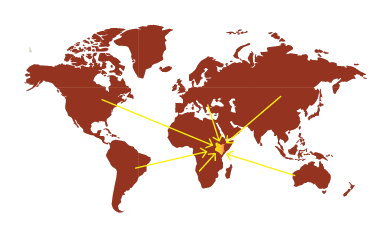

Investors do not leave markets because they are imperfect; they leave when they become unpredictable.
The recent United States National Trade Estimate Report on Foreign Trade Barriers once again places Kenya in the global conversation on regulatory friction and governance, identifying corruption and public procurement challenges as significant barriers to doing business.
That matters; but it is only part of the picture.
From the same report, the numbers tell a different story.
a) U.S. goods exports to Kenya rose to $990.8 million in 2025, a 28.5 percent increase.
b) Total goods trade reached approximately $1.8 billion.
c) The United States recorded a goods trade surplus of $131.9 million dollars, up over 285 percent from the previous year.
d) Services trade between the two countries remained strong, at about 1.8 billion dollars.
The numbers tell a different story because investment follows predictability, and that is where Kenya’s real story lies.
Over the past decade, Kenya has deliberately built a framework that anchors investor rights in the following ways:
- A progressive constitutional order that secures administrative justice and protects commercial rights.
- Specialized tribunals that resolve sector-specific disputes.
- Regulatory bodies, including in public procurement, designed to enhance transparency.
- Increasing digitization of government processes, reducing opacity and administrative discretion.
- Targeted tax incentives and reliefs to stimulate priority sectors.
- Established Special Economic Zones (SEZs) with regulatory and fiscal advantages.
- Legal guarantees on repatriation of profits and capital, strengthening investor certainty.
- Continued investment in infrastructure, especially roads and logistics corridors.
- Access to a young, educated, and increasingly skilled workforce that supports scalable operations.
Sometimes these efforts are uneven but they are always meaningful.
Kenya is not a perfect system; it is an evolving, legally structured one. For investors, that distinction is fundamental.
Kenya today is not defined by the absence of risk, but by its growing ability to understand, challenge, and resolve that risk within the law.
There is also a deeper shift. Investors from highly regulated jurisdictions, particularly the United States, operate under strict compliance regimes such as the Foreign Corrupt Practices Act, which do not permit participation in environments where transactions cannot be justified, documented, and defended.
Yet despite these constraints, trade volumes between Kenya and the United States are rising. That is both the paradox and the opportunity.
Kenya is not a risk‑free jurisdiction; it is an increasingly structured one, where risk is more visible, more contestable, and more firmly governed by law. In markets like Kenya, outcomes are not automatic; they depend on how well the legal framework is understood, how effectively institutions are engaged, and how precisely transactions are structured. That, ultimately, is the real differentiator.
Kenya remains one of Africa’s most strategic investment hubs. Not because it is without challenge, but because even within those challenges, it remains legible, active, and capable of supporting compliant, structured investment.
FAQs
Is Kenya too risky for foreign investors?
Kenya is not a risk-free market, but it is not an unstructured one either. The real issue is not whether risk exists, but whether that risk can be understood, documented, and managed through the legal system. For serious investors, that distinction matters.
Why does Kenya still attract investment despite governance and regulatory concerns?
Because investors do not make decisions on headlines alone. They look at whether a market remains commercially active, legally navigable, and strategically important. Kenya continues to attract capital because it offers regional access, infrastructure growth, a skilled workforce, and an increasingly structured investment environment.
Can foreign investors repatriate profits and capital from Kenya?
Kenyan law provides legal guarantees around the repatriation of profits and capital, which is a key part of investor confidence. That said, these protections work best when the investment is properly structured from the start and supported by clear documentation and regulatory compliance.
What should U.S. and European investors pay close attention to before entering Kenya?
They should focus on documentation, transaction structure, sector-specific approvals, anti-corruption compliance, and partner due diligence. Investors from highly regulated jurisdictions need a transaction they can justify, verify, and defend internally as well as legally.
What are the most important legal steps to reduce risk before investing in Kenya?
Start with early legal planning. That includes choosing the right investment structure, reviewing licensing requirements, conducting due diligence on land, counterparties, and approvals, and making sure contracts clearly allocate risk, control, and exit rights.
If something goes wrong, can investment disputes in Kenya be resolved effectively?
In many cases, yes. Kenya has courts, specialized tribunals, and sector-specific regulatory bodies that can help address disputes and administrative friction. The quality of the outcome often depends on how well the transaction was documented and how early legal issues were identified.
Is Kenya more suitable for short-term or long-term investors?
Kenya generally rewards long-term, well-structured investors more than opportunistic ones. The strongest results tend to come when investors understand the local legal framework, engage institutions properly, and build for durability rather than speed alone.
When should an investor engage Kenyan legal counsel?
Before capital is committed, not after problems appear. Legal counsel is most valuable at the front end of a transaction, when structure, approvals, counterparties, and protections can still be shaped in a way that reduces avoidable risk.