
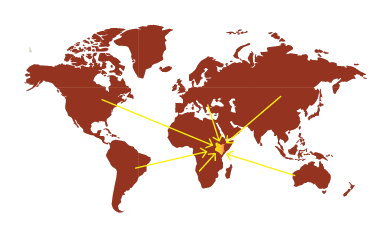
Foreign investors are steadily deepening their exposure to Kenya. Recent foreign investment survey data show that the stock of foreign direct investment (FDI) rose by 8.5% between the end of 2022 and the end of 2023, from Kes 1,343.1 billion to Kes 1,457.5 billion. Even where year on year flows have softened, investor sentiment remains positive, with nearly 40% of surveyed enterprises indicating plans to reinvest or expand in the medium term.
Kenya’s macro story is familiar: a regional hub, a young and skilled workforce, and access to both the East African Community and wider African markets. It has earned the moniker “Silicon Savannah” and is widely viewed as a gateway into East and Central Africa. What often receives less attention is the legal architecture that underpins this confidence.
A core element of that architecture is the Foreign Investments Protection Act, Cap. 518 (FIPA). Unlike legislation that focuses only on promotion, FIPA is designed around protection. It offers statutory guarantees to qualifying foreign investments, giving investors assurance that their capital, returns, and proprietary interests enjoy a defined level of legal security.
Approved Investments and Certification
FIPA does not apply automatically to all foreign investments in Kenya. Protection is tied to an “approved enterprise” status, evidenced by a Certificate of Approved Enterprise issued by the Cabinet Secretary responsible for finance. Investors who obtain this certificate bring their qualifying investments within the scope of FIPA’s guarantees.
In practice, this means that foreign investors who meet certain criteria, including minimum capital thresholds and recognized forms of investment, can secure formal protection. For many, especially those in capital intensive sectors such as energy, manufacturing, construction, and technology, the certificate is an important anchor for long term planning.
Protection against Expropriation and Nationalization
One of FIPA’s most important safeguards is protection against expropriation and nationalization. The Act provides that no approved enterprise, or property belonging to it, may be compulsorily taken or acquired except in accordance with the law and subject to the payment of prompt compensation. Investors also have a right of direct access to the High Court to challenge the legality of any such acquisition and to seek appropriate compensation.
This framework reflects broader constitutional standards on property rights and compulsory acquisition for public purposes. Taken together, the requirements of legality, public purpose, and prompt, fair compensation materially reduce political risk. They help align Kenya with international expectations on the treatment of foreign owned property, which is particularly relevant for long term infrastructure, real estate, and industrial projects.
Free Transfer of Capital, Profits, and Returns
FIPA also addresses a central concern for cross border investors: the ability to move funds in and out of the country. The Act guarantees that holders of approved enterprise certificates may remit various categories of funds abroad, including:
- Capital on repatriation or upon sale or liquidation of the investment.
- Profits and dividends.
- Interest and loan repayments.
- Royalties, management fees, and technical service fees.
These guarantees work alongside Kenya’s broader foreign exchange and monetary policy framework. For investors, this means reduced risk of capital lock in and greater comfort around exit strategies, whether through asset disposals, group restructurings, or public listings.
Equal Treatment and Legal Certainty
Beyond expropriation and repatriation, FIPA signals Kenya’s commitment to fair and predictable treatment of approved foreign investors. While it does not operate in isolation from sector specific regulation, the Act reinforces the expectation that administrative and regulatory action will not be arbitrary or discriminatory
In regulated sectors, such as energy, mining, telecommunications, and financial services , certainty is often as valuable as formal incentives. Investors with long project horizons and heavy compliance obligations place a premium on clear rules and consistent application. By providing a statutory baseline for treatment and remedies, FIPA helps ensure that foreign investors are not left at the mercy of shifting policies or unpredictable decisions.
Dispute Resolution and International Arbitration
Kenya’s investor protection framework extends beyond domestic law. FIPA operates against a backdrop of bilateral investment treaties and other international investment agreements that Kenya has concluded, many of which provide for investor–State arbitration in fora such as ICSID (or under UNCITRAL rules. In some cases, special arrangements or agreements that grant additional protections to specific investments may also be notified and recognized.
This combination of local guarantees and access to neutral international dispute resolution is important for sophisticated foreign investors, including sovereign funds, private equity, and multinational corporates. It provides comfort that, if disputes arise, there are structured avenues to seek redress, whether through Kenyan courts or international arbitration seated in a neutral jurisdiction.
A Broader Ecosystem of Confidence
FIPA does not operate in a vacuum. It fits within a wider ecosystem of constitutional guarantees, sector specific laws, double taxation agreements, and Kenya’s membership in regional and multilateral institutions. Kenya also participates in risk mitigation frameworks such as the Multilateral Investment Guarantee Agency (MIGA), which can provide cover against non-commercial risks.
For foreign investors, this ecosystem is as important as any single statute. It supports a long term view of Kenya as a jurisdiction where capital can be protected, returns can be repatriated, and disputes can be managed within recognized legal channels. FIPA is one of the clearest statutory expressions of that policy direction.
How WAREN Law Supports Foreign Investors
WAREN Law Advocates LLP operates at the intersection of this legal framework and real world investment decisions. We have a proven track record advising Chinese engineering, procurement, and construction (EPC) contractors and manufacturers on structuring and executing projects in Kenya. Our team has also represented a broad range of foreign investors, from individual entrepreneurs to institutional funds, across sectors such as infrastructure, manufacturing, technology, and services.
Because cross border investments often span multiple jurisdictions, we have built working relationships with law firms and advisers in key partner markets. This allows us to offer investors cohesive, end to end support, from Kenyan regulatory issues to foreign law considerations and treaty based protections.
At WAREN Law, we guide foreign investors through each stage of the investment cycle: market entry and structuring, regulatory and licensing processes, ongoing compliance, and dispute resolution. We aim to be more than legal technicians. We aim to provide partnership, foresight, and trust as you deploy and grow capital in Kenya and the wider region.