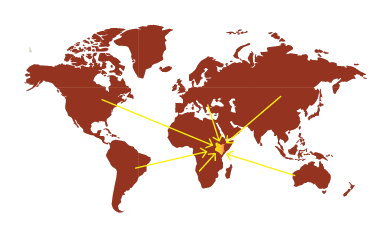

A practical legal guide for corporate directors, international investors, and multinational companies planning to invest in Kenya’s mining, energy, manufacturing, and real estate sectors.
Kenya is one of Africa’s most compelling investment destinations. A strategic location at the heart of East Africa, access to a regional market of over 300 million people through the East African Community, a young and increasingly educated workforce, and a financial system ranked among the continent’s strongest all make the case for entry. Add to that the country’s growing energy infrastructure, rich mineral deposits, and a government actively courting foreign capital, and the opportunity becomes hard to ignore.
But opportunity and risk are never far apart. Foreign investors who enter the Kenyan market without proper legal guidance routinely encounter problems that could have been prevented: regulatory delays that stall projects, ownership structures that create unintended exposure, licensing requirements that differ sharply from one sector to the next, and contractual arrangements that leave capital unprotected when relationships change or political circumstances shift.
This guide is written for the corporate director, the investment committee member, and the international entrepreneur who is evaluating Kenya seriously. It covers the legal foundations, the sector-specific realities, and the strategic considerations that separate a well-protected investment from a costly misstep.
1. Kenya’s Investment: What Makes It Attractive
Kenya functions as the commercial, financial, and logistical hub of East Africa. Nairobi hosts the regional headquarters of numerous multinational corporations, international organisations, and development finance institutions. The Nairobi Securities Exchange is one of Africa’s most active capital markets, and the country’s banking sector is both sophisticated and regionally interconnected.
The government’s Strategic Plan 2023–2027 has set an ambitious target of increasing foreign direct investment from approximately USD 500 million to USD 10 billion by 2027. To support this, Kenya is developing Special Economic Zones designed to offer regulatory predictability and quality infrastructure, particularly for manufacturing and export-oriented industries. The country’s Energy Transition and Investment Plan, ratified in 2023, lays out a pathway toward net-zero emissions by 2050 while expanding energy access creating significant opportunities for investors in renewable energy and green manufacturing.
For investors in extractive industries, Kenya’s mineral wealth is increasingly attractive. The country holds deposits of rare earth elements, niobium, titanium minerals, graphite, manganese, and copper: all critical components in the global energy transition. Mining sector investment has seen a measured resurgence, driven by global demand for these critical minerals.
2. Legal Framework for Foreign Investment
Kenya’s investment environment is broadly liberalised. Foreign investors can hold 100% ownership in companies across most sectors, with no general requirement for local equity participation. There are no regulations prohibiting joint ventures between Kenyan and foreign entities, and no blanket restrictions on the acquisition of Kenyan firms by foreign-owned companies.
However, sector-specific restrictions do apply, and failing to account for them is one of the most common errors foreign investors make:
- Insurance: Foreign capital investment is limited to two-thirds of a company, with no single person holding more than 25% ownership.
- Telecommunications and ICT: Foreign investment is capped at 70%, with a minimum 30% local participation requirement.
- Private security: At least 25% Kenyan ownership is required.
- Construction: Foreign contractors must subcontract or enter joint ventures ensuring at least 30% of contract work is performed by local firms.
- Land ownership: Foreigners cannot own freehold land. Leasehold interests are limited to a maximum of 99 years. Many foreign investors structure property holdings through Kenyan-registered companies.
The Kenya Investment Authority (KenInvest) serves as the primary government body for investment facilitation. While obtaining an investment certificate is no longer mandatory, investors who do apply must demonstrate a minimum investment of USD 100,000 and show that the investment is lawful and beneficial to Kenya. KenInvest operates a One Stop Centre that consolidates interactions with the Business Registration Service, Kenya Revenue Authority, Ministry of Lands, Immigration Services, and other agencies.
3. Company Registration and Business Structuring
The most common vehicle for foreign investment in Kenya is a private limited company registered through the Business Registration Service (BRS). Registration is handled online through the eCitizen platform and typically takes a few days to a few weeks, depending on the complexity of the application and any sector-specific approvals required.
Key steps include reserving a company name, filing articles of association, registering for a KRA PIN (tax identification number), and obtaining relevant county business permits and sector-specific licences. Foreign investors who intend to reside in Kenya and manage operations must also secure a Class G investor permit and an Alien Card.
Structuring decisions made at the point of entry have long-term consequences. The choice between a wholly-owned subsidiary, a branch office, a joint venture, or a holding company structure affects tax exposure, liability, profit repatriation, and exit options. Investors operating across multiple jurisdictions — particularly those structuring through holding companies in Mauritius, the Netherlands, or Singapore — need Kenyan counsel who understands how local law interacts with international investment frameworks, bilateral investment treaties, and applicable tax treaties.
4. Sector-Specific Considerations
Mining
Kenya’s mining sector is governed primarily by the Mining Act of 2016, which regulates prospecting, extraction, processing, and transport of minerals. The regulatory environment has been in flux: in September 2025, the High Court declared several 2024 Mining Regulations unconstitutional, creating a period of legal uncertainty for operators. Investors entering this space need current, ground-level legal intelligence; not just a reading of the statute books.
Mining investments require exploration licences, environmental impact assessments approved by the National Environmental Management Authority (NEMA), community engagement agreements, and compliance with the National Mining Corporation’s oversight role. County-level approvals add another layer. The process is multi-agency, and timelines can differ significantly from official estimates.
Energy
Kenya generates nearly 90% of its electricity from renewable sources, with over 2.6 GW of installed renewable capacity. The country’s geothermal resources, wind corridors, and solar potential make it one of Africa’s most attractive energy markets. Investment opportunities range from independent power production to grid infrastructure, off-grid solutions, and green manufacturing.
Energy projects involve power purchase agreements, negotiations with the Energy and Petroleum Regulatory Authority (EPRA), grid access arrangements, and compliance with evolving energy management regulations. Recent regulatory developments, including the Energy (Energy Management) Regulations of 2025, have introduced new compliance requirements around energy audits and performance standards. Planned interconnections with the Eastern Africa Power Pool are expected to expand market options for both generators and large consumers.
Manufacturing
Manufacturing in Kenya means navigating import duties, labour law compliance, land use regulations, county-level permitting, and supply chain logistics. The government’s Green Manufacturing Policy signals a strategic direction toward sustainable industrial production, and Special Economic Zones are being developed to attract manufacturing FDI with dedicated infrastructure and regulatory frameworks.
The Business Laws (Amendment) Act enacted in December 2024 strengthened regulatory oversight across sectors including manufacturing, introducing stricter standards and requiring foreign conformity assessment bodies to be accredited by the Kenya Accreditation Service. Investors should factor these requirements into their compliance planning from the outset.
5. Protecting Your Investment: Legal Structures That Last
Smart structuring at the point of entry is what separates investments that survive political transitions, partner disputes, and regulatory shifts from those that don’t. Several protective mechanisms are available to foreign investors in Kenya:
- Bilateral Investment Treaties (BITs): Kenya is party to multiple BITs that provide protections against expropriation, ensure fair and equitable treatment, and offer access to international arbitration mechanisms.
- ICSID Membership: Kenya is a member of the International Centre for Settlement of Investment Disputes. Awards from ICSID arbitration are binding and enforceable as final decrees of Kenya’s High Court.
- Stabilisation Clauses: In certain sectors, particularly mining and energy, contractual stabilisation clauses can protect against adverse regulatory changes during the life of an investment.
- International Arbitration Provisions: Well-drafted investment agreements should specify dispute resolution mechanisms that go beyond local courts, particularly for cross-border transactions.
- Joint Venture Protections: Clear decision-making authority, exit mechanisms, deadlock resolution provisions, and protections against partner overreach are essential in any partnership arrangement.
The Constitution of Kenya (2010) enshrines the protection of private property, and Kenya’s legal system provides enforceable contract rights. But rights on paper are only as strong as the legal structures built around them. The goal is not just compliance — it is durability.
6. Tax Obligations and Financial Planning
Foreign businesses operating in Kenya are subject to corporate income tax (currently 30%), value-added tax on applicable goods and services, withholding taxes on certain payments, and customs duties on imports. Tax incentives are available in Special Economic Zones, for certain manufacturing activities, and under specific investment agreements.
Critically, investors operating across borders must understand how Kenyan tax law interacts with their home-country obligations. Kenya has signed double taxation agreements with several countries, which can significantly affect the net cost of repatriating profits. Transfer pricing rules apply to transactions between related entities, and compliance with anti-money laundering regulations under the Proceeds of Crime and Anti-Money Laundering Act (2009) is mandatory for all financial transactions.
Getting the tax structure right at the outset — rather than trying to fix it later — can be the difference between a profitable venture and a costly one.
7. Common Mistakes Foreign Investors Make
Having advised international clients entering the Kenyan market across sectors including mining, energy, manufacturing, and real estate, we have observed the same avoidable mistakes repeatedly:
- Relying on the statute books alone. Kenyan law on paper and Kenyan law in practice are not always the same. Regulatory timelines, agency processes, and county-level requirements often differ from what official guidelines suggest. Ground-level legal intelligence matters as much as technical legal knowledge.
- Underestimating multi-agency complexity. A single investment may require approvals from the relevant sector regulator, NEMA, county governments, the Ministry of Lands, the Kenya Revenue Authority, and Immigration Services. Without a coordinated legal strategy, these processes run sequentially rather than in parallel, and timelines balloon.
- Using generic legal structures. An investment agreement drafted without Kenya-specific protections — stabilisation clauses, international arbitration provisions, clear exit mechanisms — leaves capital exposed to risks that were foreseeable and preventable.
- Neglecting due diligence on local partners. Joint ventures and local partnerships are often essential, but the wrong partner can derail an entire investment. Thorough vetting, clear contractual terms, and properly drafted shareholder agreements are non-negotiable.
- Treating legal counsel as transactional. The most valuable legal relationship for a foreign investor in Kenya is not a one-off engagement but an ongoing advisory partnership. The regulatory landscape shifts. Political circumstances change. A trusted local legal partner who understands your sector, your structure, and your long-term objectives is an asset, not an expense.
8. Why Local Legal Expertise Is Important
International law firms with African practices offer certain advantages, but they cannot replace deep local knowledge. The Kenyan legal and regulatory environment has layers that only an experienced, well-connected local firm can navigate efficiently: which government agencies are functional and which are bottlenecked, what the real timelines look like versus the official ones, how county-level dynamics affect project approvals, and where the regulatory trajectory is heading.
Ready to Invest in Kenya?
WAREN Law Advocates LLP advises international investors, corporate directors, and multinational companies on business structuring, regulatory compliance, investment protection, and cross-border transactions in Kenya. We work across mining, energy, manufacturing, real estate, and financial services, and we are known for fast turnaround, straight talk, and getting results where others see complexity.
If you are planning an investment in Kenya, we are ready to talk.
Book a Call with Ephraim
FAQs
Can a foreign investor own 100% of a company in Kenya?
Yes, in most sectors, a foreign investor can own 100% of a company in Kenya. However, some industries have sector-specific ownership restrictions. For example, insurance, telecommunications, private security, and certain construction arrangements may require a level of local participation. This is why investors should never assume that the general rule applies to their specific sector without legal review.
Do foreign investors need a local Kenyan partner to enter the market?
Not always. In many sectors, foreign investors can enter the Kenyan market without a local equity partner. That said, some sectors impose local participation requirements, and in other cases a local partner may be commercially useful even where it is not legally required. The issue is not just whether a local partner is allowed or required, but whether the relationship is structured in a way that protects control, decision-making authority, and exit rights.
Do I need to register a company in Kenya before investing?
In most cases, yes. Foreign investors typically enter the Kenyan market through a private limited company, branch office, joint venture vehicle, or holding structure. The right option depends on the nature of the investment, tax considerations, liability exposure, and long-term exit strategy. Registering the wrong vehicle at the beginning can create tax, compliance, and control problems later.
Can foreigners own land in Kenya?
Foreigners cannot own freehold land in Kenya. They may hold leasehold interests for up to 99 years. Because land is often central to projects in manufacturing, energy, real estate, and logistics, investors should treat land due diligence as a major legal workstream, not a minor administrative step. Title review alone is not enough. The investor also needs to understand tenure, use restrictions, approvals, access, and project suitability.
What is the biggest legal mistake foreign investors make when entering Kenya?
The most common mistake is treating legal setup as a formality instead of a risk-control strategy. Investors often focus on registration first and structure later. That approach creates avoidable exposure. The stronger approach is to decide first how the investment should be protected, controlled, taxed, and exited, and only then move into registration and implementation.
Why is local legal counsel important for foreign investors in Kenya?
Because Kenyan law in practice is not always the same as Kenyan law on paper. Official processes may look straightforward, but actual timelines, agency coordination, county-level requirements, and sector-specific realities often require local knowledge and practical judgment. A strong local legal advisor helps investors move faster, avoid preventable delays, protect capital, and make better long-term decisions.
How can foreign investors protect their capital in Kenya?
Protection starts with structure. The right legal protections may include a properly designed entry vehicle, strong shareholder or joint venture agreements, clear control rights, dispute resolution clauses, stabilisation protections where appropriate, and access to international arbitration mechanisms. Good legal planning does not remove all risk, but it makes the investment far more durable when commercial relationships, regulation, or political conditions change.
Is Kenya a good market for mining, energy, manufacturing, and real estate investment?
Kenya remains one of the most attractive entry points into East Africa for investors in these sectors. It offers regional access, a developed financial system, growing infrastructure, and significant opportunities in energy, minerals, industry, and real estate. But the quality of the opportunity does not eliminate legal risk. The investors who perform best are usually not the ones who move fastest at the start, but the ones who enter with the clearest legal and commercial structure.